

The Trump administration announced in January 2026 that it would withdraw the United States from several international organizations, conventions, and treaties, arguing that these arrangements no longer served American interests.
That decision occurred amid broader debates among the U.S. foreign policy establishment over burden-sharing, sovereignty, strategic competition, and the utility of the multilateral system, which was constructed under U.S. leadership after World War II. Meanwhile, the international community has struggled to respond effectively to the wars in Ukraine and the Middle East, climate emergencies, debt distress, and challenges posed by new technologies like artificial intelligence.
Together, these developments point to a broader challenge: a legitimacy crisis in global governance.
While multilateral institutions remain indispensable for addressing transnational problems, many governments have called for reforms to global governance arrangements that they argue no longer adequately reflect contemporary political and economic realities. Institutions created 80 years ago continue to operate according to the same power distributions, despite profound transformations in the global economy, demography, and international politics.
Geopolitical competition will continue to strain and test multilateral institutions. But the bigger question is whether these institutions can retain sufficient legitimacy to coordinate collective action in an increasingly diverse and multipolar international system.
Legitimacy and Effectiveness: A False Trade-Off
A longstanding argument in international politics holds that greater representation reduces institutional effectiveness. According to this view, expanding participation complicates decision-making and weakens institutions’ ability to act decisively. Yet recent evidence suggests that greater representation and effectiveness need not always be competing objectives. More representative institutions can strengthen institutional performance by fostering broader participation, political ownership, and compliance, even if broader membership may at times make consensus-building more complex.
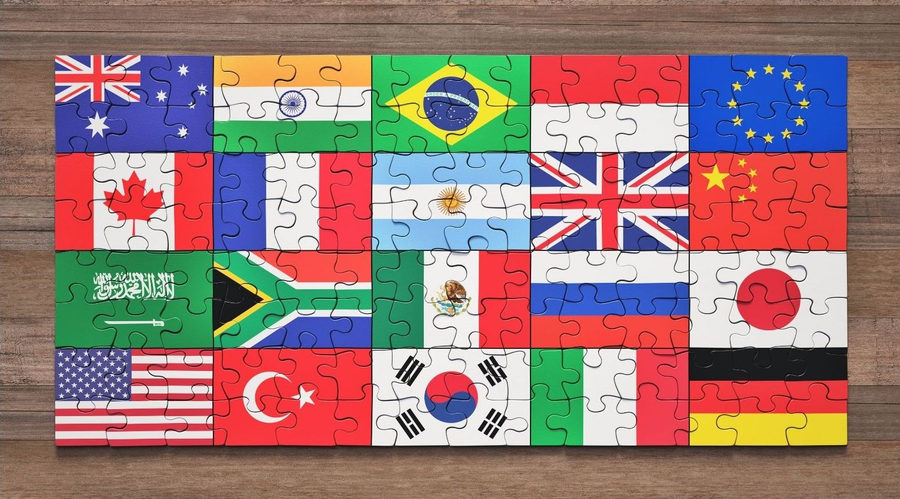
The 2008 global financial crisis, for example, demonstrated the limitations of narrow governance arrangements. As financial instability spread across advanced and emerging economies alike, the G7 — a group of seven leading industrial nations — proved insufficient as a coordination mechanism. The elevation of the Group of 20 (G20) to the leaders’ level reflected recognition that effective crisis management required broader participation from emerging powers. Similarly, the African Union’s admission as a permanent member of the G20 in 2023 recognized the importance of broader representation in global economic governance.
These developments suggest that legitimacy and effectiveness can reinforce one another. The challenge, therefore, is not choosing between representation and effectiveness, but recognizing that, under contemporary conditions, effectiveness increasingly depends upon legitimacy.
Democracy Beyond Borders
The debate over multilateral reform also raises a broader democratic question.
States that promote democratic governance domestically have often resisted efforts to democratize international institutions. Yet countries across the Global South have long argued that democratic principles should not stop at national borders.
This contradiction is particularly visible in the architecture of global governance. The United Nations Security Council continues to reflect the geopolitical realities of 1945; its structure, including its permanent membership and veto system, has remained largely unchanged despite profound transformations in international politics. The absence of a permanent African seat remains one of the clearest examples of the gap between contemporary realities and existing governance arrangements. This is especially striking given the Security Council's longstanding engagement with peace and security issues across the African continent.
Global South countries have similar concerns as it relates to international financial institutions. While quota reforms have modestly expanded the voice of emerging economies within the International Monetary Fund, governance structures in both the IMF and the World Bank continue to reflect historical distributions of influence. As a result, calls for greater voice and representation for developing countries remain a recurring feature of contemporary debates on global economic governance. The BRICS bloc — which was founded in 2009 by Brazil, Russia, India, and China in 2009, with South Africa joining in 2010 — has proposed IMF reform that reflects the changing structure of the global economy and the growing weight of emerging markets through quota shares and governance arrangements.
These calls for reform aim to promote greater democratic consistency between the principles that multilateral institutions promote and how they operate in reality.
Why Alternative Institutions Are Emerging
The proliferation and growing importance of alternative institutions should not be interpreted primarily as an effort to dismantle the existing international order. In many cases, these initiatives reflect frustration with the slow pace of reform within established institutions. Examples include the New Development Bank, the Asian Infrastructure Investment Bank, and regional organizations such as the Association of Southeast Asian Nations. While these institutions were created at different times, the current geopolitical environment has heightened the value many states place on multiple avenues for cooperation, financing, and political coordination.
The creation of the New Development Bank in 2014 followed years of debate regarding representation and voting power within Bretton Woods institutions. Rather than seeking to replace existing organizations, the bank was conceived as an additional source of development finance and a complement to existing multilateral development institutions. Likewise, the expansion of BRICS reflects demands for greater participation, representation, and institutional reform. The persistence of such initiatives suggests that legitimacy deficits within existing institutions are not merely symbolic concerns, but have concrete institutional consequences, encouraging states to seek alternative venues through which to advance their interests and priorities.
These developments reveal a broader trend. Many countries in the Global South seek greater participation in international governance rather than alignment with any particular geopolitical bloc. Western efforts to discourage or penalize initiatives aimed at increasing Global South countries’ agency may therefore prove counterproductive. When Global South demands for reform are interpreted by the Global North as threats to the existing order rather than expressions of dissatisfaction with existing governance arrangements, perceptions of exclusion tend to deepen.
These dynamics extend beyond formal institutional reform and increasingly shape debates about the rules governing the international economy.
Recent debates within BRICS surrounding local currency settlements, alternative payment mechanisms, and proposals to reduce dependence on a single reserve currency illustrate this dynamic. These discussions have been reinforced by concerns that excessive dependence on a single currency can create vulnerabilities when access to financial networks and payment systems becomes intertwined with geopolitical disputes and sanctions policies. Whether or not such proposals ultimately succeed, their growing visibility reflects wider concerns regarding representation, participation, and institutional responsiveness to shifts in the global economy and the distribution of power.
Viewed from this perspective, the emergence of alternative institutions is less a rejection of multilateralism than evidence of unmet demands for reform within existing multilateral structures. Institutional diversification can strengthen international cooperation by broadening participation and expanding available resources. The challenge lies in preventing fragmentation and preserving effective coordination through a legitimate and inclusive multilateral framework, with the United Nations continuing to play a central role in addressing global collective problems.
Policy Recommendations
Here’s how the United States and multilateral institutions can adapt to today’s geopolitical realities.
The U.S. Congress should:
- Support discussions on governance reforms aimed at increasing the representativeness and legitimacy of international institutions, particularly regarding the participation of Global South countries; and
- Strengthen engagement with multilateral institutions as mechanisms for burden-sharing, crisis coordination, and collective problem-solving; and
- Expand structured dialogue with governments, regional organizations, and policy networks from the Global South regarding proposals for institutional reform.
Meanwhile, whatever administration is in power in the U.S. should:
- Avoid selective applications of international norms that undermine institutional credibility and weaken multilateral cooperation;
- Reinvest diplomatically in multilateral forums and reform negotiations aimed at strengthening institutional legitimacy;
- Promote dialogue on governance reform rather than framing demands for greater representation as challenges to the international order; and
- Avoid punishing or discouraging Global South initiatives seeking greater economic or institutional autonomy and instead prioritize engagement aimed at addressing underlying concerns regarding representation, participation, and legitimacy.
Multilateral institutions will need to:
- Advance meaningful governance reforms capable of increasing representational legitimacy;
- Expand participation of Global South countries in agenda-setting and decision-making processes; and
- Strengthen coordination between established and emerging institutions to reduce fragmentation and enhance policy coherence.
Conclusion
Multilateral institutions must adapt global governance to contemporary realities. The legitimacy crisis confronting international institutions has contributed to growing fragmentation, declining trust, and the proliferation of alternative arrangements. Yet these developments should not be interpreted solely as challenges to the existing order. They also represent demands for greater inclusion, participation, and democratic accountability.
A more representative international order can strengthen cooperation, improve policy coordination, and increase the legitimacy upon which effective global governance ultimately depends. In a period marked by geopolitical tensions and mounting transnational challenges, renewing multilateralism requires not only preserving institutions but also reforming them.
-900x473.png)
-900x506.jpg)