

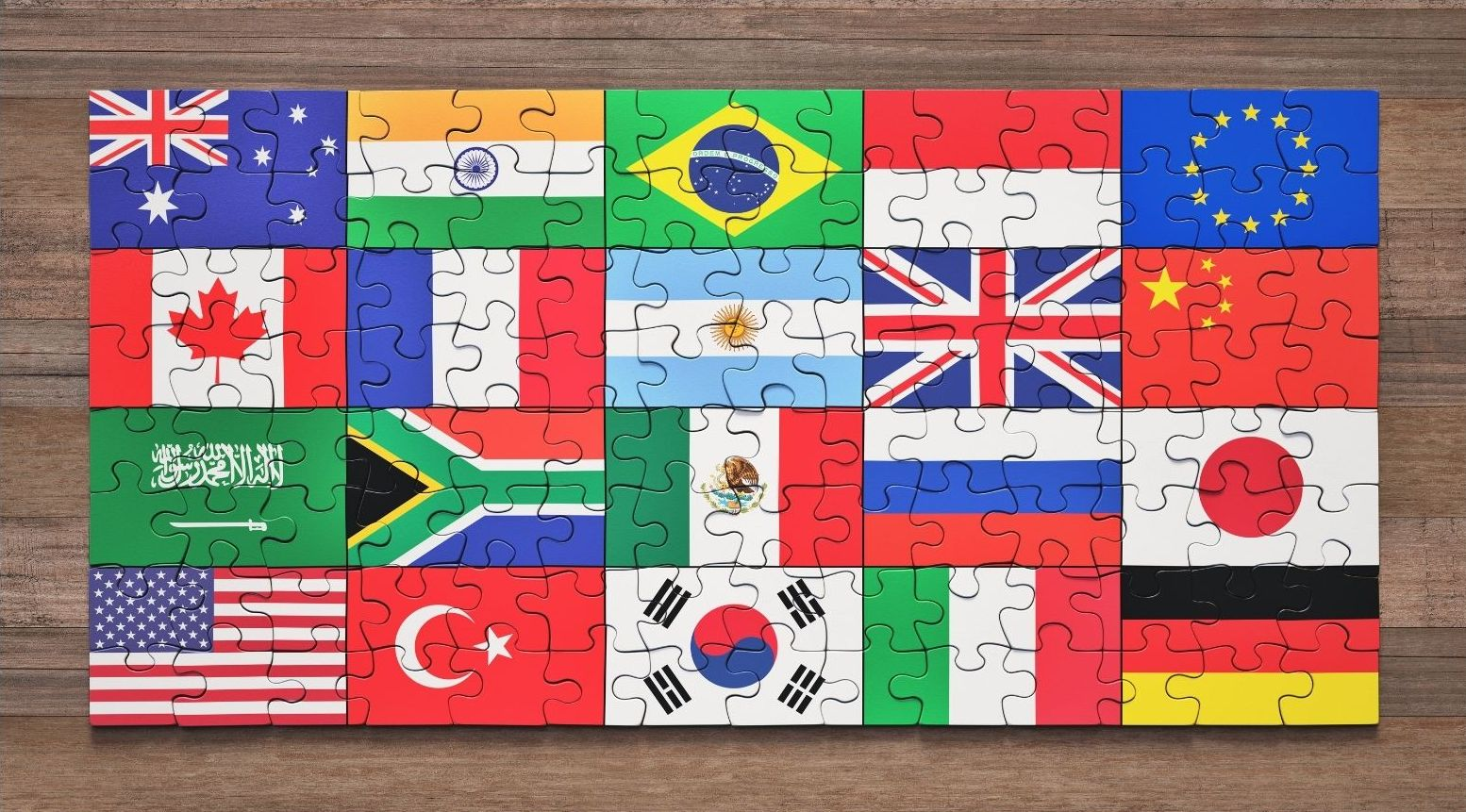
As the United States helms the presidency of the Group of 20 (G20) leading economies this year, it faces growing competition for influence across the Global South. The rapid expansion of the BRICS bloc — founded in 2009 by Brazil, Russia, India, and China, with South Africa joining in 2010 — reflects dissatisfaction with existing institutions and increasing demands for reform of global economic governance. Rather than viewing these developments solely through a geopolitical lens, the United States has an opportunity to strengthen multilateral institutions and rebuild trust with Global South countries by reforming the international financial architecture.
Created after the 2008 global financial crisis, BRICS emerged with a common demand to reform international financial institutions, particularly the International Monetary Fund (IMF), and increase the influence of emerging economies. Since then, it has established annual summits, created institutions such as the New Development Bank (NDB), and expanded to include Egypt, Ethiopia, the United Arab Emirates, Iran, and Indonesia, along with 10 partner countries that do not enjoy full membership.
Recently, trade protectionism, recurring debt crises, climate emergencies, and the wars in Ukraine, Gaza and Iran have exposed the limitations, hypocrisy, and imbalance of the multilateral system. As a result, many Global South countries have increasingly turned to South–South cooperation, regional institutions, and Chinese-led financing initiatives.
Alternative institutions do not automatically produce a more equitable order. BRICS countries themselves reproduce important asymmetries in trade, investment, finance, and corporate power. The challenge is therefore not simply to replace existing institutions, but to build a more democratic, development-oriented, and socially accountable multilateral system.
How this plays out matters not only for the Global South but also for the United States. By imposing tariffs and other protectionist policies and retreating from multilateral institutions, the United States risks undermining its own capacity to exercise leadership and build consensus.
The United States should respond to these developments in two ways. First, it should engage cooperatively with countries seeking to preserve policy space and diversify their economic partnerships rather than forcing them to choose between Beijing and Washington. Second, it should strengthen multilateral institutions and support greater voice and participation for developing countries.
click to zoom in
Alternatives and Limits for the Global South
The current international order is increasingly characterized by geopolitical fragmentation. The relative decline of U.S. leadership, combined with China’s rise as a major economic and technological power, and Russia’s geopolitical repositioning, has intensified disputes over global governance.
BRICS emerged as a reformist coalition demanding greater representation within existing institutions. Its members have criticized the imbalance of IMF governance and sought greater influence within the international financial architecture. Over time, however, BRICS evolved into a more geopolitical coalition, particularly since Russia’s annexation of Crimea in 2014, the war in Ukraine, and growing U.S.–China tensions. While BRICS’ rise reflects dissatisfaction with Global North-dominated institutions, it does not constitute an alternative global order, at least not yet.
BRICS countries have advanced initiatives such as the NDB, local-currency financing, and cross-border payment mechanisms. Russia and China have expanded the use of local currencies in trade and developed alternative payment infrastructures to reduce dependence on the Global North-led SWIFT global financial messaging network.
In 2022, the NDB set a goal of financing 30% of its activities in members’ local currencies by 2026. By 2024, cumulative approved projects had reached $39 billion across 120 operations. Although most financing remained denominated in U.S. dollars, local-currency lending expanded significantly, reaching 43.5% of disbursements in 2024, mainly in Chinese and South African currencies.
Intra-BRICS exports have increased from $84.2 billion in 2003 to $1.17 trillion in 2024. Trade within BRICS remains heavily concentrated around China, with countries such as Brazil, South Africa, and Russia exporting primarily commodities while importing higher-value industrial goods and technologies. This reproduces unequal patterns of specialization within South–South relations, with China supplying sophisticated manufactured goods while other members remain dependent on exporting of raw materials and low-value-added products.
Global South Countries Seek Autonomy, Not Alignment
Many countries across the Global South do not want to choose between the United States and China. Instead, they increasingly pursue strategies of diversification, pragmatism, and autonomy — often described as multi-alignment or active non-alignment.
India, a leading actor in the Non-Aligned Movement during the Cold War, adapted its foreign policy after the collapse of the Soviet Union to strengthen ties not only with the United States but also with other emerging powers. Brazil participates simultaneously in BRICS and the G20, and has partnerships with the United States, the European Union, and China. Its objective is to preserve diplomatic flexibility while avoiding automatic alignments.
During Brazil’s 2025 BRICS presidency, Brasília deliberately moderated the bloc’s rhetoric on de-dollarization and emphasized multilateralism, development, and peace, while seeking to dispel perceptions of BRICS as anti-Global North. Brazil adopted a strategy of “flying under the radar,” shifting focus from reducing dependence on the U.S. dollar to trade facilitation. Overall, Brazil emphasized a more balanced international system based on development, multilateralism, and peace. This contrasted with Russia’s 2024 BRICS presidency, which advanced a more ambitious financial agenda.
Despite Brazil’s moderation, the United States announced in July 2025 tariffs of 50% on Brazilian and Indian products and 30% on South African products. President Trump had also previously threatened to place 100% tariffs on BRICS countries if they pursued alternatives to the dollar. By targeting three major BRICS members simultaneously as it was retreating from multilateralism more generally, Washington risks undermining the U.S. capacity to exercise leadership in the Global South.
The U.S. has increasingly used tariffs as a political pressure tool. In Brazil’s case, the U.S. government linked the rise of tariffs to alleged judicial abuses in the prosecution of former President Jair Bolsonaro, along with Brazil’s policies on digital trade, payment services, tariff arrangements, deforestation, ethanol, intellectual property, and anti-corruption measures. Such actions undermine the principle of non-interference in internal affairs and may further distance Brazil from the United States, while encouraging closer engagement with China and BRICS.
Policy Recommendations
The G20 presidency offers the United States an important opportunity to change course, engage constructively with the Global South, and promote a more inclusive, representative, and equitable system of global economic governance. The G20 is one of the few forums that brings together the Group of 7, BRICS, and other Global South countries, such as those of the African Union.
The United States should work together with Global South countries and prioritize mutually beneficial issues, including sovereign debt vulnerabilities, climate finance, taxation, development finance, and the reform of multilateral development banks. The United States should respond constructively to longstanding Global South demands while strengthening the effectiveness of the existing multilateral system. Here’s how:
- Support reforms to debt governance and reduce borrowing costs for developing countries. The United States should use its leadership in the G20, IMF, and World Bank to reform the Debt Sustainability Analysis framework, incorporating climate vulnerability and development investment needs alongside fiscal indicators. It should also accelerate reform of the G20 Common Framework to facilitate timely and effective debt workouts that expand fiscal space for low- and middle-income countries.
- Reform IMF lending and expand access to liquidity. The United States should support the gradual elimination of IMF surcharges, which increase borrowing costs for countries facing economic crises, and expand the rechanneling of Special Drawing Rights through mechanisms such as the Poverty Reduction and Growth Trust and the Resilience and Sustainability Trust. Access to these facilities should be broadened through more flexible eligibility criteria and reduced conditionalities.
- Advance international tax cooperation to finance development and climate action.
The United States should strengthen the reform of the Organization for Economic Cooperation and Development/G20 tax framework by addressing profit shifting and tax avoidance by multinational corporations, while supporting the implementation of the United Nations Framework Convention on International Tax Cooperation. Greater tax transparency and more effective taxation of multinational profits and extreme wealth can help mobilize resources for climate action, sustainable development, and poverty reduction. - Support a more representative and coordinated multilateral financial architecture.
The United States should back IMF quota and governance reforms that increase the voice and representation of Global South countries and emerging economies. It should also encourage cooperation among the IMF, World Bank, regional development banks, and the NDB to mobilize financing for climate adaptation, sustainable infrastructure, and development priorities. - Engage constructively with BRICS and other Global South initiatives. The United States should pursue pragmatic cooperation on shared challenges, including climate finance, infrastructure, public health, and sustainable development. Recognizing the Global South’s growing demands for strategic autonomy can help reduce fragmentation, rebuild trust, and strengthen U.S. engagement in a more multipolar world.
The expansion of BRICS should not be interpreted as a rejection of multilateralism. Rather, it reflects growing dissatisfaction with institutions that have failed to adequately adapt to contemporary economic realities. Most Global South countries seek reform rather than rupture.
As host of the G20 in 2026, the United States has an opportunity to respond constructively to these demands. By advancing reforms on sovereign debt, climate finance, development banking, and international taxation, Washington can strengthen global economic stability, rebuild trust with developing countries, and reinforce its own leadership in an increasingly multipolar world.