

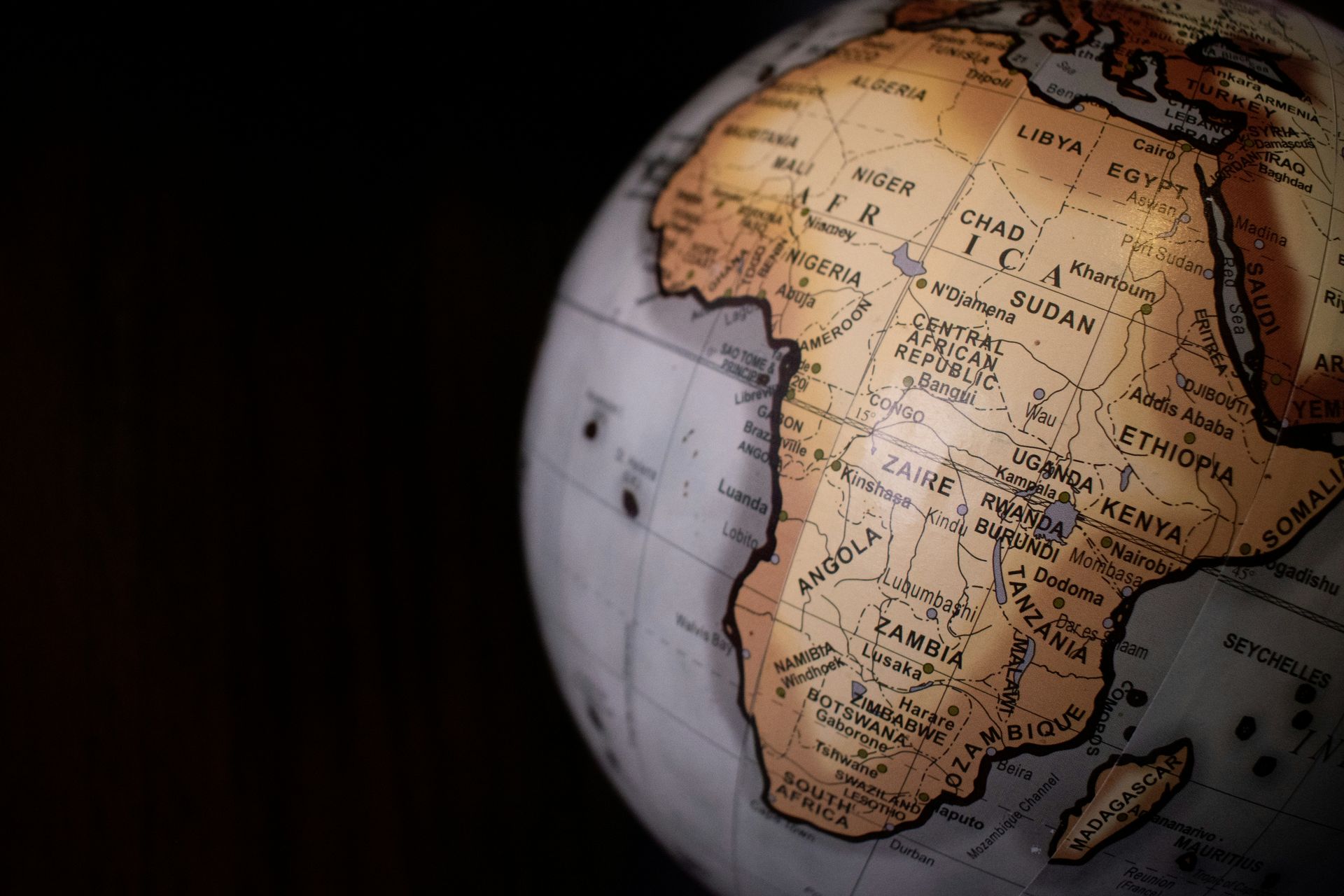
Africa’s immense potential is undermined by recurring sovereign debt crises. With a population poised to reach 2.5 billion people by 2050, enough wind power to meet 250 times the continent’s electricity needs, 60 percent of the world’s solar resources, and 30 percent of known transition mineral reserves, Africa is rife with unfulfilled promise. Yet, external shocks over the past decade — including the COVID-19 pandemic and climate shocks — have compounded African states’ ability to service unsustainable debt levels, particularly in the absence of an effective and equitable sovereign debt restructuring regime.
Roughly 57 percent of the continent’s population, or 751 million Africans, live in countries that spend more on servicing external debt than they do on health care and education. According to a report from the Institute for Economic Justice, Africa’s debt servicing is at its highest levels since the 2000s debt crisis, and the cost of borrowing is significantly higher for African countries compared to other developing regions. Meanwhile, the report’s authors note that annual debt service payments amount to 137.4 percent of climate needs.
These debt dynamics maintain Africa’s role in the global economy as an exporter of raw materials, cash crops, and cheap, precarious labor, and reinforce Africa’s position vis-à-vis former colonial and imperialist powers. Indeed, sovereign debt has long been an economic tool used to extract economic and political concessions. Haiti, for example, was forced to pay the equivalent of $21 billion to have its independence recognized by France. French banks provided the loans to pay this sum, fostering a cycle of debt and neocolonial dependence.
click to zoom in
Reforms for a New Era
Amid a shifting geopolitical landscape, three dynamics are emerging: 1) middle-income countries are increasingly becoming creditors; 2) private finance is increasingly providing credit to developing countries; and 3) former colonial powers are decreasing their provision of credit (see Table 1). These dynamics necessitate two broad areas of reform in the global debt architecture. The first relates to the current sovereign debt restructuring system, from the Paris Club to the G20 Common Framework; the second relates to domestic legislation that will improve national governance systems and foster transparency and democracy in debtor countries.
Africa’s Public and Publicly Guaranteed External Debt Stock by Creditor Class, Share of Total, 2008 and 2023
Source: WB IDS (2024)
Fixing the G20 Common Framework
There is a clear need to expand the set of creditor countries included in sovereign debt restructuring processes and to reassess the rules governing these processes. The COVID-19 pandemic accelerated this necessity when debt distress became widespread, and the shifting creditor landscape required a landing place outside of the traditional Paris Club creditors. The dominant forum for debt relief discussions thus became the G20’s Debt Service Suspension Initiative (DSSI) and Common Framework. But both efforts have fallen short of the needs of African, and other developing countries.
The Common Framework, which adopted a case-by-case approach to multilateral restructuring, introduced institutional innovation by expanding the negotiating table beyond Paris Club creditors to include countries like China and Saudi Arabia. However, the Common Framework had several major flaws in handling insolvency cases, undermining its stated purpose of achieving debt sustainability. These flaws include that the Common Framework:
- Is slow, with prolonged negotiations;
- Provides minimal debt relief using inaccurate debt sustainability analyses, preventing countries from embarking on new development paths;
- Fails to ensure fair participation from all creditor classes, particularly from private creditors who often are paid earlier and bear less cost than official creditors;
- Lacks linkages and commitments between debt relief and future climate and development goals; and
- Excludes middle-income countries that need debt relief.
Ultimately, the DSSI provided limited debt relief, suspending just $12.9 billion across 48 of 73 eligible countries. The other 25 countries chose not to apply or delayed their application for fear of credit-rating downgrades. The average savings from the DSSI for Sub-Saharan Africa amounted to just 0.4% of each country’s individual GDP, which was far too little relief to address the pandemic and support development.
The following are recommendations for reform of the Common Framework.
- Implement an automatic two-year debt service standstill upon countries' entry into the Common Framework, during which no interest accrues. This would limit creditors’ incentives to delay the process and would shift from case-by-case negotiations to a group-based approach for countries in debt distress.
- Compel private bondholders to participate in restructuring processes by advancing legislative reforms in key jurisdictions like New York State and London, where 80 percent of sovereign debt is issued. This could, among other things, facilitate the creation of a debt standstill mechanism.
- Adjust debt relief amounts based on an enhanced debt sustainability analysis that includes climate risks, considers the positive growth spillover effects of public investments, offers more realistic growth trajectories, and investment needs to ensure that recent relief efforts reduce the risk of debt distress to a lower level.
- Create a simple, fair Comparability of Treatment (CoT) rule that considers risk pricing and concessionality. Burden sharing of losses could be distributed through a rule that results in creditors that charged higher premiums bearing a larger share of the burden, while creditors that charged lower premiums and higher grant elements, such as multilateral development banks (MDBs), shoulder a smaller share of the burden. (Figure 1 below presents a comparison between flat CoT, where all creditors share the burden in proportion to the total debt, and fair CoT scenarios of intercreditor burden-sharing for 33 low-income African countries in need of debt relief.) The Common Framework should include all creditor classes in negotiations as standard procedure, but could offer greater flexibility in the types of relief each creditor receives to accommodate creditors’ distinct preferences.
- Protect multilateral creditors’ debt relief efforts by selling International Monetary Fund gold. The IMF could sell its abundant gold reserves given the record-high prices of gold at above $4,000 per ounce. A small fraction of its 90.5 million ounces of gold reserves could comfortably cover MDBs’ portion of restructuring costs. The IMF could create a new endowment that accrues interest over time and serves as a sustainable source of funding for subsidies.
- Expand Common Framework eligibility to include emerging markets and middle-income economies.
Debt Relief: Intercreditor Burden Sharing for 33 Low-Income African Countries in need of Debt Relief
Source: Author's calculations, based on WB IDS (2024) and Zucker-Marques et al. 2023
Ensuring Democracy, Transparency, and Accountability
International financial institutions (IFIs) could play a catalytic role in countercyclical lending, capital financing for long-term development projects through MDBs, and improving macroeconomic and financial stability in times of crisis. Amid development and climate challenges, developing countries urgently need condition-free, low-interest capital. While IFIs often offer concessional lending at rates lower than those African countries can access in the market, the financial cost of the loans should be considered alongside their impact on policy and the process of democratic decision-making.
Historically, IFI loan conditionality has undermined policy flexibility and, consequently, the social contract between the state and citizens that is so crucial to a healthy democracy. These conditions should be determined democratically through systems of parliamentary approval and oversight. Democratic institutions should always consider the short- and long-term implications of IFI lending by asking if the loans are necessary, and whether they affect constitutional commitments, policy autonomy, democratic processes, national sovereignty, and human rights.
The following recommendations aim to ensure democracy, transparency, and accountability.
1. Policy conditionalities or commitments negotiated, as well as project appraisals, need to be tabled in Parliament before a loan agreement is made. This appraisal should include:
- Projected costs to taxpayers over the lifetime of the loans;
- A long-term impact assessment of a loan on the country’s debt sustainability and human rights obligations;
- A human rights and development assessment of the impact on gender, and environmental outcomes; and
- A national sovereignty report on the impact of the lending on national sovereignty.
2. Strengthen transparency of IFI lending by making loan agreements and impact assessments accessible on the websites of IFIs and national treasuries to ensure that oversight and accountability are less time-consuming, expensive, and exclusionary. Transparency of sovereign obligations could be further enhanced by establishing a global sovereign debt repository.
3. Institute a majority vote for approval of IFI loans. This would ensure that democratically elected representatives have greater oversight and approval of IFI borrowing and strengthen citizen participation in this process. Strengthening the institutional role of legislatures in this way is increasingly common among countries like Zambia, Mozambique, and Argentina that have gone through debt crises and seek to prevent future ones. The IFIs and official bilateral lenders should require this legislative process in all countries that receive their loans.
Conclusion
Africa’s recurring debt distress is a predictable outcome of structural inequities embedded in the global financial system and compounded by insufficient domestic accountability mechanisms. Although this policy brief did not discuss industrialization, food, and energy sovereignty as key elements of sustainable development, these factors should be fundamental aspects of the institutional reforms proposed.
While Africa possesses many of the key elements of a successful modern economy, translating this potential requires investment through both domestic and external resource mobilization consistent with principles of equity, democracy, transparency, accountability, and a developmental agenda.
This policy brief draws heavily on the Institute for Economic Justice’s working paper series on sovereign debt and international financial institutions.