

click to zoom in
The persistence of debt crises across the Global South reflects deep structural weaknesses in the international financial architecture. While domestic policy choices matter, they are only one part of a broader system that systematically reproduces vulnerability.
The Second V20 Debt Review’s recent estimates indicate that external public and publicly guaranteed debt across V20 countries — a group of states with economies particularly vulnerable to climate change — has reached approximately $1.01 trillion, more than doubling over the past decade. Debt servicing reached over $130 billion in 2024, with cumulative payments projected at $746 billion between 2025 and 2031. In many cases, countries now spend more on servicing debt than on health, education, or climate adaptation.
Why Debt Recidivism Persists
Debt recidivism is not accidental — it is structurally embedded in the design of multilateral lending, conditionality frameworks, and debt restructuring processes. Here are four reasons why it persists:
- The system remains fundamentally reactive. Financial support is typically mobilized only after external shocks occur. The lag between shock, financing, and eventual restructuring creates prolonged periods of economic contraction.
- Debt restructurings are frequently too little and too late. Programs often rely on optimistic growth projections and partial creditor participation, particularly where private creditors are involved. Countries exit restructurings with debt burdens that remain highly sensitive to shocks.
- Adjustment is prioritized over transformation. Fiscal consolidation measures, while intended to restore stability, often constrain public investment in growth-enhancing sectors. Governments are forced into a narrow policy space where meeting external obligations takes precedence over building productive capacity, resilience, and social protection systems. This limits long-term growth and perpetuates dependence on external financing.
- Climate vulnerability is a central driver of debt dynamics. Between 2000 and 2019, climate-related losses across vulnerable economies reached approximately $525 billion. At the same time, debt service obligations now exceed estimated climate investment needs by a factor of four.
The critical issue is not only the scale of shocks, but the inability to recover between them. A hurricane, flood, or drought triggers a cycle: destruction of capital, loss of revenue, emergency borrowing, rising debt service, and constrained fiscal space. Before recovery is complete, another shock occurs.
This repeated interruption locks countries into a pattern of borrowing for reconstruction rather than investing in resilience, reinforcing a structural “debt-disaster loop.” This system converts external shocks into permanent fiscal stress.
Lessons from Argentina
Argentina’s repeated debt crises illustrate the systemic nature of debt recidivism. Since 1958, Argentina has entered into more than 20 IMF-supported programs, including a $57 billion arrangement in 2018, followed by sovereign default in 2020. Three lessons are particularly instructive:
- Domestic ownership is critical. Programs that lack political and social legitimacy are difficult to sustain, particularly when adjustment measures impose visible costs on households and firms.
- Austerity without growth undermines stability. Fiscal consolidation in a contracting economy weakens revenue generation and exacerbates debt burdens.
- Political economy constraints are central. Reform programs that do not adequately account for social and institutional realities risk triggering instability, undermining program objectives.
Argentina’s experience is an amplified case of a broader systemic pattern.
Conditionality, Human Rights, and Democratic Governance
Conditionality remains a defining feature of multilateral lending, shaping fiscal and structural policies in borrowing countries. While intended to restore macroeconomic stability, it often raises significant concerns for governance, human rights, and political legitimacy.
Conditionality frameworks tend to apply standardized policy prescriptions — such as fiscal consolidation, subsidy reform, and public-sector wage reform — regardless of structural differences or levels of vulnerability. The United Nations Development Program has found that austerity measures have been associated with rising inequality and reduced access to essential services in many developing countries. In small and climate-vulnerable states, these effects are magnified. Reductions in public expenditure can directly affect health care, education, and social protection systems.
Conditionality can also result in policy decisions being made by external institutions, limiting domestic policy autonomy and constraining parliamentary oversight. The result is a tension between external credibility and internal legitimacy, in which governments must balance the demands of international financing with the expectations of their populations. In some cases, this has contributed to social unrest and a narrowing of civic space.
Reform Pathways and Emerging Practices
Alternative approaches are both feasible and effective when appropriately designed. Programs in Jordan and Egypt have incorporated social spending floors, mitigating the social impacts of adjustment and supporting broader program sustainability.
Grenada and Barbados have pioneered the use of natural disaster clauses in sovereign debt instruments, allowing for the temporary suspension of debt service following major climate shocks, embedding resilience directly into financial contracts.
Elsewhere, the World Bank’s Catastrophe Deferred Drawdown Option provides rapid liquidity in the aftermath of disasters, reducing the need for costly emergency borrowing. The IMF and World Bank are increasingly recognizing the importance of integrating climate risk into debt sustainability analysis and program design.
Finally, a consistent lesson across successful cases is the importance of national institutional capacity. Programs that are anchored in domestic institutions and priorities tend to achieve more durable outcomes than those driven primarily by external actors.
Reforming Debt Restructuring Processes and U.S. Policy Levers
The current approach to sovereign debt restructuring remains fragmented, slow, and uncertain. Delays in reaching agreements increase economic costs and prolong recovery. Recent cases from Zambia and Sri Lanka, for example, illustrate these challenges.
Four priority reforms include:
- Restructuring processes must become more predictable and timelier. Existing mechanisms, including the Paris Club and the G20 Common Framework, have not delivered the speed or comprehensiveness required. Time-bound processes with clear rules and full creditor participation are needed.
- Private creditor coordination remains a major gap. With private creditors holding an increasing share of sovereign debt, delays in their participation can stall entire restructuring efforts. Strengthening legal and regulatory frameworks to facilitate coordinated action is essential.
- Climate-resilient debt instruments should be scaled systematically. The inclusion of state-contingent features, such as disaster clauses, can help break the link between shocks and debt distress.
- Liquidity support must be expanded. Many crises escalate due to short-term liquidity constraints rather than underlying insolvency. Enhanced access to rapid-disbursing financing and more effective use of Special Drawing Rights (SDR) would help stabilize economies before crises deepen. Longer debt tenors and more access to concessional financing should also be pursued.
The Role of the U.S. Congress
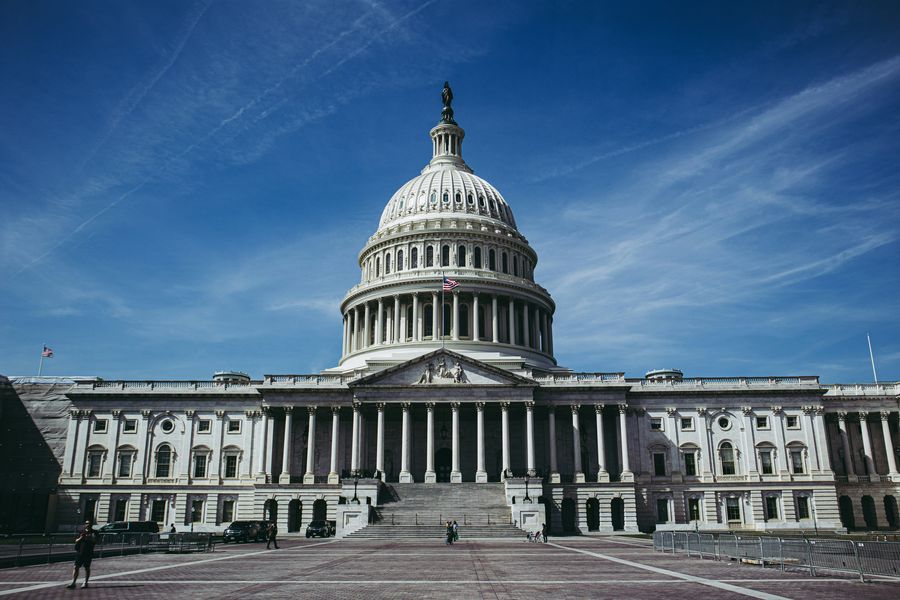
As the largest shareholder in the IMF and World Bank, the United States plays a central role in shaping multilateral lending practices. Congress can influence reforms through oversight, appropriations, and voting power. This includes promoting greater transparency in program design, supporting reforms to debt restructuring frameworks, and encouraging alignment between financial policies and climate vulnerability.
Global South Reform Priorities
Global South countries have advanced a number of reform proposals, including the establishment of a more comprehensive U.N. sovereign debt restructuring framework, expanded use and rechanneling of SDR, and greater support for country-led development platforms. The primary challenge is political rather than technical. Reforms that require burden-sharing among creditors often face resistance, slowing progress despite broad recognition of systemic weakness.
Conclusion
Climate vulnerability has intensified how the international financial system traps Global South countries in cycles of debt crises. Breaking this cycle requires a shift from reactive crisis management to proactive resilience-building. This includes more effective restructuring mechanisms, more flexible and context-sensitive program design, and greater alignment between financial systems and climate realities.
For V20 countries, the stakes are particularly high. Without systemic reform, rising debt, increasing climate shocks, and constrained fiscal space will continue to undermine development prospects and political stability.
The path forward is clear. What's needed is the political will to act.