

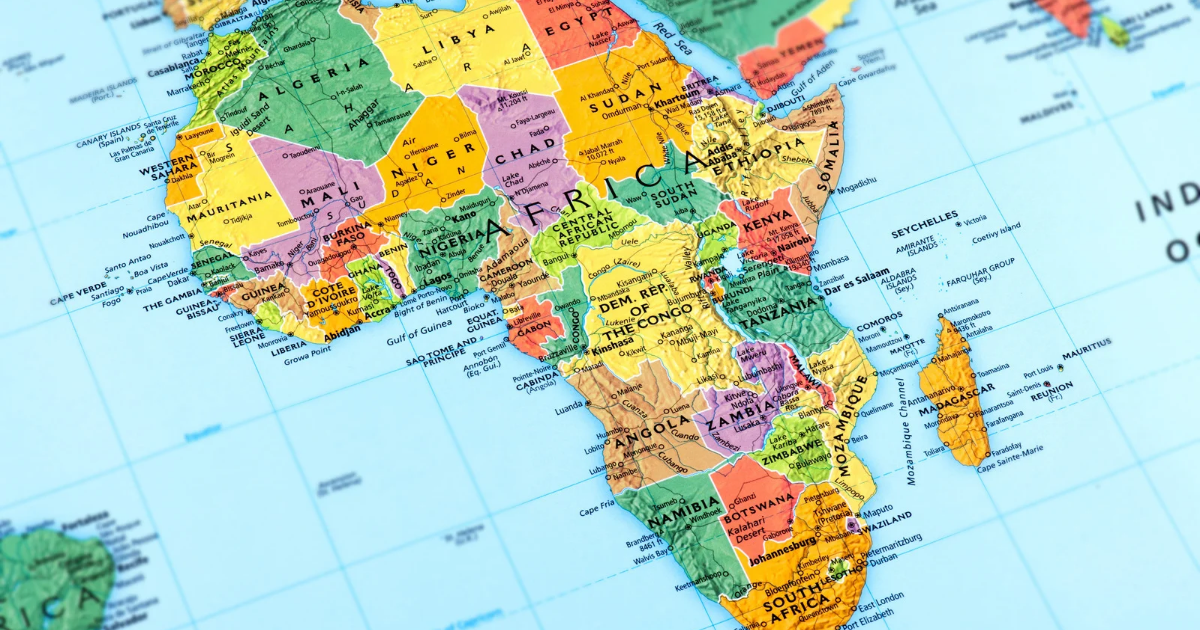
In 2025, the China Civil Engineering Construction Corporation signed a 30-year concession to rehabilitate, manage, and operate the Tanzania-Zambia (TAZARA) Railway, committing $1.4 billion. The roots of this project go back half a century. In 1964, Tanzania and Zambia approached the World Bank and other financiers for funding to build the railway, but the request was denied, as the railway was deemed not economically viable. The two countries then acquired an interest-free loan from China and completed the railway in 1976. TAZARA now competes with the U.S.-backed Lobito Corridor to transport critical minerals such as copper and cobalt. African governments remember who showed up and on what terms.
That memory still matters, especially as many traditional Global North donors cut their foreign aid budgets. Twenty-six of the 34 members of the Organization for Economic Co-operation and Development's Development Assistance Committee reduced their Official Development Assistance (ODA) by 23.1% in 2025, from $215 billion in 2024 to $165 billion. The five largest aid providers — France, Germany, Japan, the United Kingdom, and the United States — accounted for 95.7% of that drop. The United States reduced its assistance by 56.9%, driving three-quarters of the total decline. Aid to African countries fell by 23.9%. Donor countries are now significantly below the 0.7% of national income target set by the United Nations General Assembly in 1970.
Amid this new aid landscape, African countries can no longer focus on how much assistance they’ll receive, but on which partners to choose. Can the United States remain a partner of choice for the continent amid competing offers from other actors such as China, the Gulf Cooperation Council, and, most importantly, one another? The answer depends less on any single budget deadline than on a larger decision in Washington: whether and how the United States wants to engage African countries as trade and development partners. Doing so predictably is not charity — it advances American interests.
China’s Influence
China offers African countries market access and infrastructure more than aid. At the 2024 Forum on China-Africa Cooperation (FOCAC), China pledged 360 billion yuan (approximately $50 billion) for 2025–2027; most of that was company investment and credit lines. Additionally, data shows that Chinese firms’ investment in African countries that have signed on to Beijing’s Belt and Road Initiative grew by 254% to $33.5 billion in the first half of 2026.
Regarding market access, China already had zero tariffs for 33 African countries categorized as least developed. In May 2026, China extended that policy to 20 other African countries with larger economies, including Algeria, Egypt, Kenya, Nigeria, and South Africa, bringing the total to 53 countries with zero-tariff access to China's market.
Chinese lending has also shaped perceptions because it comes without governance conditions, reflecting Beijing’s non-interference policy. By contrast, the United States often conditions its aid on governance and human rights benchmarks. From 2000 to 2024, China lent $180.9 billion to African states, reaching 49 countries and seven regional institutions. However, annual lending fell to $2.1 billion in 2024, less than a tenth of its 2016 peak, as China has shifted more toward trade and investment. Meanwhile, the Trump administration has shifted Washington’s focus away from governance conditionalities and toward migration cooperation, commercial diplomacy, and mineral access, making the relationship more transactional than predictable.
China has long maintained strong relationships with African countries. Beijing convenes FOCAC every three years. This consistent interaction leads African countries to lean more toward China. By contrast, the United States has held only two U.S.-African Leaders’ summits (2014 and 2022), and no date has been announced for a third.
African Countries Are Increasingly Focused on Development
In 2025, African countries focused on investing in their futures, pledging $182.7 million to the African Development Fund, the concessional financing arm of the African Development Bank Group. African countries pledged five times more than any previous contribution; importantly, 19 African countries pledged for the first time. In total, the fund mobilized $11 billion from 43 partners. However, the United States did not pledge in 2025 despite pledging $568 million in 2023.
The Trump administration’s decision to dismantle the U.S. Agency for International Development (USAID) left Ghana with a $156 million deficit in key sectors such as healthcare and education, following an estimated drop in external healthcare funding to the continent from 2021 to 2025, according to the Africa Centres for Disease Control and Prevention.
African countries have responded by taking development into their own hands. For example, Ghana’s President John Mahama is spearheading African healthcare funding through the Accra Reset. The Accra Reset is a Ghana-led initiative of Global South countries, launched in September 2025, to shift international cooperation away from aid dependency and toward sovereignty and self-reliance. Several African countries, including Ghana, Kenya, Rwanda, Nigeria, Senegal, South Africa, Zambia, and Tanzania, have adopted the Accra Reset, and external partners such as Barbados, Brazil, Canada, and the United Kingdom have shown interest.
Washington’s Unpredictability
USAID was an effective, reliable aid provider until the Trump administration dismantled the agency. The U.S. Development Finance Corporation (DFC) has also proven to be an important provider of financing and investment for African countries. But a two-and-a-half-month lapse in its statutory authority briefly halted its activities last year. Congress recently reauthorized it through December 2031, raised the financing ceiling to $205 billion, and made low- and middle-income countries — a category most African countries fall into — a priority. The U.S. African Growth and Opportunity Act (AGOA) is another mechanism that boosts Africa’s development, but it has lapsed several times in recent years. AGOA was reauthorized in September, but only for two years, which fosters uncertainty for African industries about what comes next.
In July 2026, the U.S. House passed a bill that would cut global health, humanitarian, and economic aid by $902 million. The administration's fiscal 2027 request would cut State Department diplomacy and aid funding to $33.6 billion from the $45.6 billion Congress provided for fiscal 2026.
The TAZARA-Lobito contest over critical minerals will ultimately be decided by how external partners invest in local industries. African countries measure the effectiveness of development aid by economic growth, jobs created, and certainty. As the United States increasingly looks to Africa for raw minerals, African countries want to move up the value chain and earn more revenue from their natural resources. African governments do not want to take sides between Washington and Beijing. In practice, however, when one partner is predictable and the other is not, they will lean toward the side they see as stable.
Why Predictability Matters for African and American Interests
For the United States, partnering with Africa is not charity; it's a cost-effective way to maintain relationships with African governments and advance U.S. interests related to critical minerals and market access.
Washington’s goal is to reduce mineral flows to China, but ultimately, that's an African decision. Zambia, Ghana, and Zimbabwe have pushed back against Washington's call for priority access to minerals without local benefits. Partners that invest in local processing and help African countries move up the value chain will be more likely to secure long-term supplies. By July 2026, the U.S.-backed Lobito Corridor had $786 million available in loans, showing what Washington can achieve when it commits long term.
Africa is on pace to host a quarter of the world’s population by 2050, all within a single trading bloc. While China offers zero-tariff access to that massive trading bloc, AGOA’s short-term renewal injects uncertainty in the U.S-Africa trade relationship. Each AGOA lapse will push African exporters to other markets.
Unpredictability is expensive for Washington and gives other available partners and competitors an advantage.
Policy Recommendations
These recommendations aim to transform U.S. engagement by building predictable partnerships that serve both African and U.S. interests and to give Congress a path to measure what is working.
- The House Foreign Affairs and Senate Foreign Relations committees should use DFC oversight to set a public Africa investment target, expand lending in local currencies, and require co-financing with African institutions such as the African Development Bank, the African Export-Import Bank, and Africa50.
- The State Department and the U.S. Trade Representative, with the House Ways and Means and Senate Finance committees, should agree on shared measures of success with African governments and the African Union, including jobs, private capital mobilized and local processing, and report them to Congress each year.
- African governments should publish their co-financing commitments and disbursements under the health agreements and development fund pledges so that both sides can track delivery.
Conclusion
Tanzania and Zambia did not set out to choose China, but went with a partner that provided favorable terms. Other African governments are making the same calculations and have more options than they did 50 years ago. The United States does not have to outspend China; it only has to be predictable, willing to co-invest alongside African institutions, and measure success by African terms. Congress can begin in fiscal 2027 by making multi-year funding commitments — such as pledging to the African Development Fund — and renewing AGOA for a longer term.
This paper series was published in collaboration with the Heinrich Böll Foundation, Washington D.C.
