

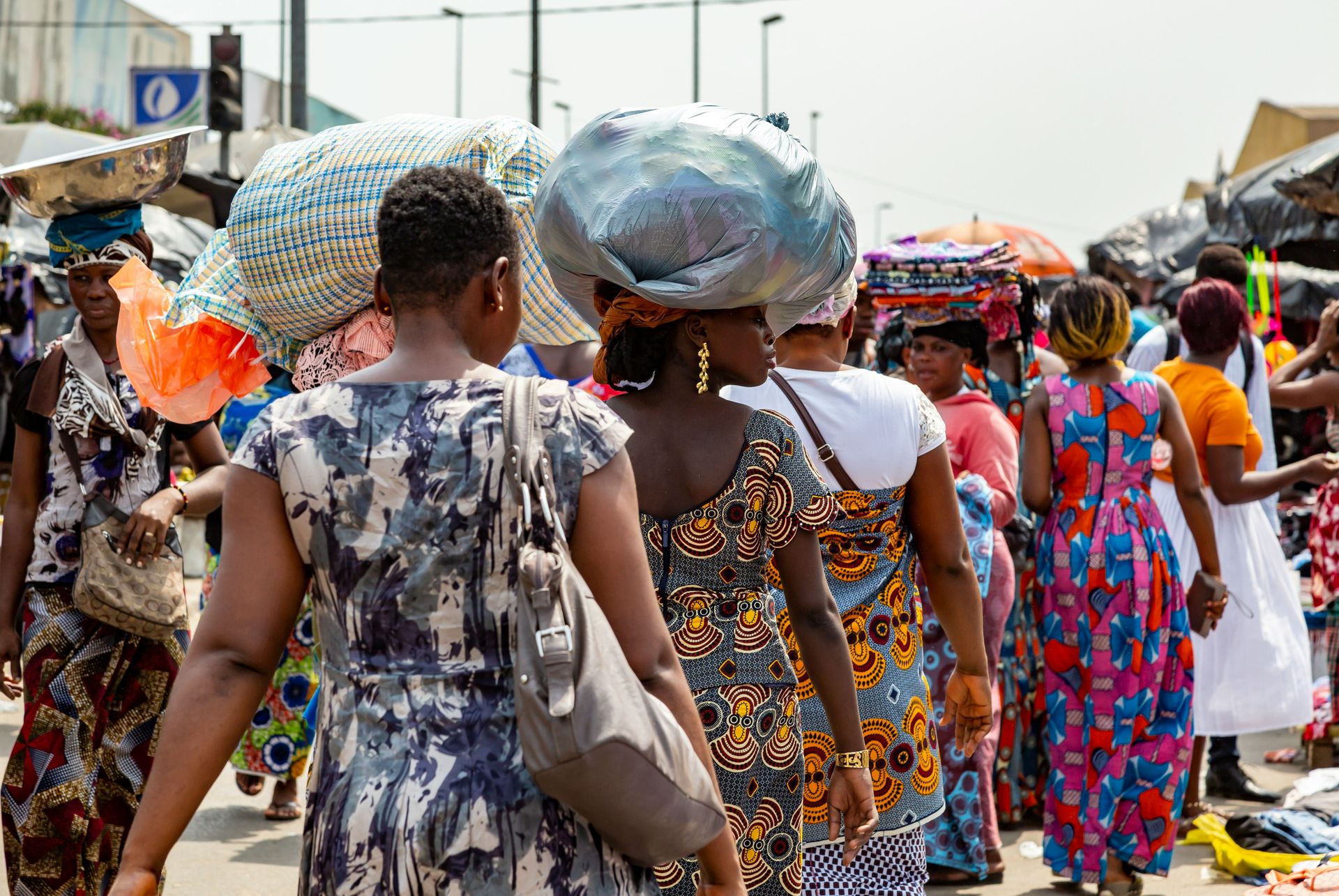
A garment worker in Lesotho's textile sector, which makes up roughly 80% of the country’s exports to the United States, spends her morning stitching apparel bound for a U.S. retailer. This worker and roughly 40,000 workers like her in the apparel sector — along with tens of thousands like them in Kenya, Madagascar, and Eswatini — build their livelihoods around a law that Congress could let expire at the end of this year.
And this wouldn’t be the first time that law has expired. When the African Growth and Opportunity Act (AGOA) lapsed on September 30, 2025, and Lesotho briefly faced a proposed 50% U.S. tariff, factory managers braced for layoffs before the rate was revised down to 15%. When Congress revived AGOA in February 2026, relief lasted only as long as the extension itself: 11 months.
AGOA, the cornerstone of U.S. trade policy toward Africa since 2000, again faces expiration on December 31, 2026. The Office of the U.S. Trade Representative (USTR) has signalled it wants to modernize the program to fit the administration's "America First Trade Policy" and opened a formal comment period in April 2026 to gather input on reform. Central to that reform is a fight over AGOA's rules of origin, which is the standard that determines whether a product counts as genuinely African-made.
This matters for Congress because the outcome will decide whether "trade over aid," the administration's own stated framework for African engagement, becomes a credible commercial partnership or another example of Washington setting Africa's terms without African input. It also matters because the current loophole in AGOA's rules of origin works against the administration's goal of countering Chinese economic influence on the continent.
How AGOA Reform Should Work
Short-term, unpredictable renewals undermine the investment AGOA is supposed to attract. AGOA lapsed for four months after its September 2025 expiration before Congress passed a retroactive extension in February 2026 that runs only through the end of this year. Since April 2025, the average tariff facing AGOA-eligible countries has jumped from below 0.5% to roughly 10%.
Kenya shows what uncertainty costs even a comparative success story under AGOA. In 2025, Kenyan factories exported a record 148 million apparel pieces up from 116 million pieces in 2026, a 27.6% increase. Yet, the value of those exports fell 4.1% as buyers pushed toward lower-value goods amid weak Western demand and aggressive price competition from Asian exporters. Formal AGOA-linked employment in Kenya still grew 22.8% to 82,026 workers that year, showing the sector's job-creating potential when investors have enough confidence to keep expanding capacity.
AGOA's rules of origin currently allow non-African fabric, including Chinese-origin material, to count toward qualifying African content, a flexibility that has helped grow the apparel sector but that also limits how much deeper local industrialization AGOA actually produces.
AGOA requires a general 35% regional value content threshold — which is high for some African economies — and its "third-country fabric provision" lets less-developed beneficiary countries use fabric of any origin, including Chinese fabric, while still qualifying for U.S. duty-free treatment. This provision has been essential to the continent's real gains in apparel manufacturing, so the fix is not to eliminate it but to raise minimum value-add thresholds while explicitly permitting cumulation from all African states. Cumulation is a trade provision that allows products from one country to be added or further processed in another country and treated as though they originate from the latter country.
West African cotton illustrates why cumulation, not elimination, is the better fix. Despite the region producing close to two million tons of cotton, roughly 90% of it is shipped to Asian manufacturers for processing rather than turned into finished goods locally. Allowing a Ghanaian mill to count toward a Kenyan garment maker's local-content threshold, as the African Continental Free Trade Area (AfCFTA) permits, gives that cotton a path to regional processing without stripping away the flexibility that let AGOA's apparel sector grow in the first place. Local leadership in setting rules-of-origin standards, not just local implementation of standards set in Washington, is what will make reform durable and credible.
African institutions have already shown they can design workable local-content rules on their own terms. The Council of African Trade Ministers reached an agreement on a rules-of-origin framework for automotive products under AfCFTA that requires vehicles to contain at least 40% African-origin content, with a built-in five-year review to adjust thresholds as African industrial capacity grows. This is a separate framework from AGOA's own rules, but it shows African institutions can set credible, enforceable local-content standards.
The current AGOA reform process is running through a U.S.-only comment period, not a joint design process with African trade institutions. Finalizing new rules of origin without African input repeats the top-down pattern that "trade over aid" claims to be moving away from, only now embedded in trade law.
How Congress Can Build a Better AGOA
Here are four ways the U.S. Congress can build a better AGOA:
- The House Ways and Means Committee and Senate Finance Committee should pass a multi-year AGOA reauthorization, ideally five to 10 years, rather than another single-year patch. A longer horizon gives African manufacturers and American buyers the predictability that short-term extensions cannot provide and removes the recurring cliff-edge that produced the 2025 lapse.
- The USTR and subcommittees on trade and international trade, customs, and global competitiveness should jointly engage in a formal, structured consultation with African trade institutions, specifically the AfCFTA Secretariat and relevant regional economic communities, before finalizing any new rules-of-origin thresholds. Congress can build this requirement directly into reauthorizing legislation, making consultation a statutory condition rather than a discretionary courtesy.
- Congress should raise AGOA's local-content thresholds gradually and permit cumulation among AfCFTA member states, so inputs from other African countries count toward a producer's local-content requirement. This will let manufacturers deepen regional supply chains at their own pace, instead of an abrupt cutoff to the third-country fabric provision that current exporters still depend on.
- The House Appropriations Subcommittee on State, Foreign Operations, and Related Programs should pair any rules-of-origin reform with targeted funding for regional trade and investment hubs, similar to those previously supported through the U.S. Agency for International Development, since these hubs help American businesses find African partners and help African producers meet stricter local-content standards.
Conclusion
Congress built AGOA to increase U.S.-African trade and encourage market-oriented reform, not to leave African manufacturers permanently dependent on non-African inputs, including Chinese ones. The choice ahead is not simply whether to renew AGOA. It is whether Congress designs the next chapter of U.S.-Africa trade policy with African institutions at the table. A multi-year renewal built around a cumulation-based rule-of-origin reform, negotiated with African trade bodies, would strengthen American manufacturing interests, deepen African regional supply chains, and give Lesotho's garment workers and millions like them across the continent the stability to plan a future around American trade policy rather than brace for its next expiration.